Your business is on Google. So why can’t your customers find it?
A few months ago, we worked with a company providing iGaming licensing and registration support across Ontario and Alberta. The business was already serving its market, but when we searched for its services, competitors were much easier to find. Its Google Business Profile was verified, but it was not fully optimized, and the website was not clearly communicating its services and locations.
That experience highlighted an important point: being verified does not guarantee strong Google Maps Visibility. Google needs clear signals to understand what your business offers, where you operate, and how relevant you are to a local search.
If your business appears when people search your name but disappears when they search for your services, it may be time to look beyond verification and strengthen the signals Google uses to rank local businesses.
What Is the Google Map Pack?
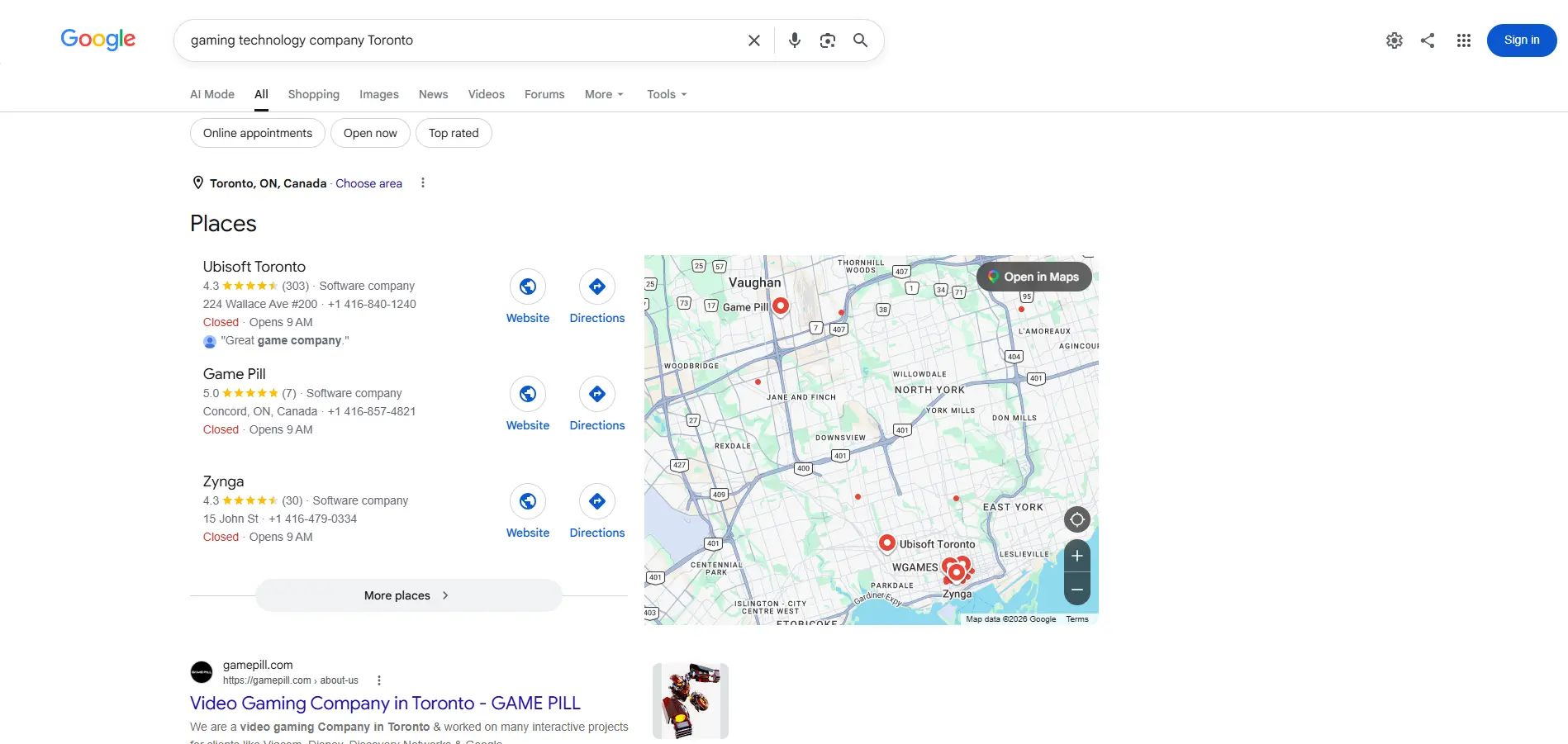
The Google Map Pack shows local business results for searches such as:
- iGaming consulting Ontario
- gaming technology company Toronto
- iGaming services Alberta
- regulatory consulting near me
Results can vary based on the search and the user’s location.
Unlike regular organic listings, the Map Pack may show business names, reviews, ratings, hours, contact details, and a map.
Your Google Business Listing helps Google understand your business and services. However, having a profile alone does not guarantee strong visibility. Google still needs clear signals that your business is relevant to the search.
What Are the Core Ranking Factors for Google Maps Visibility?
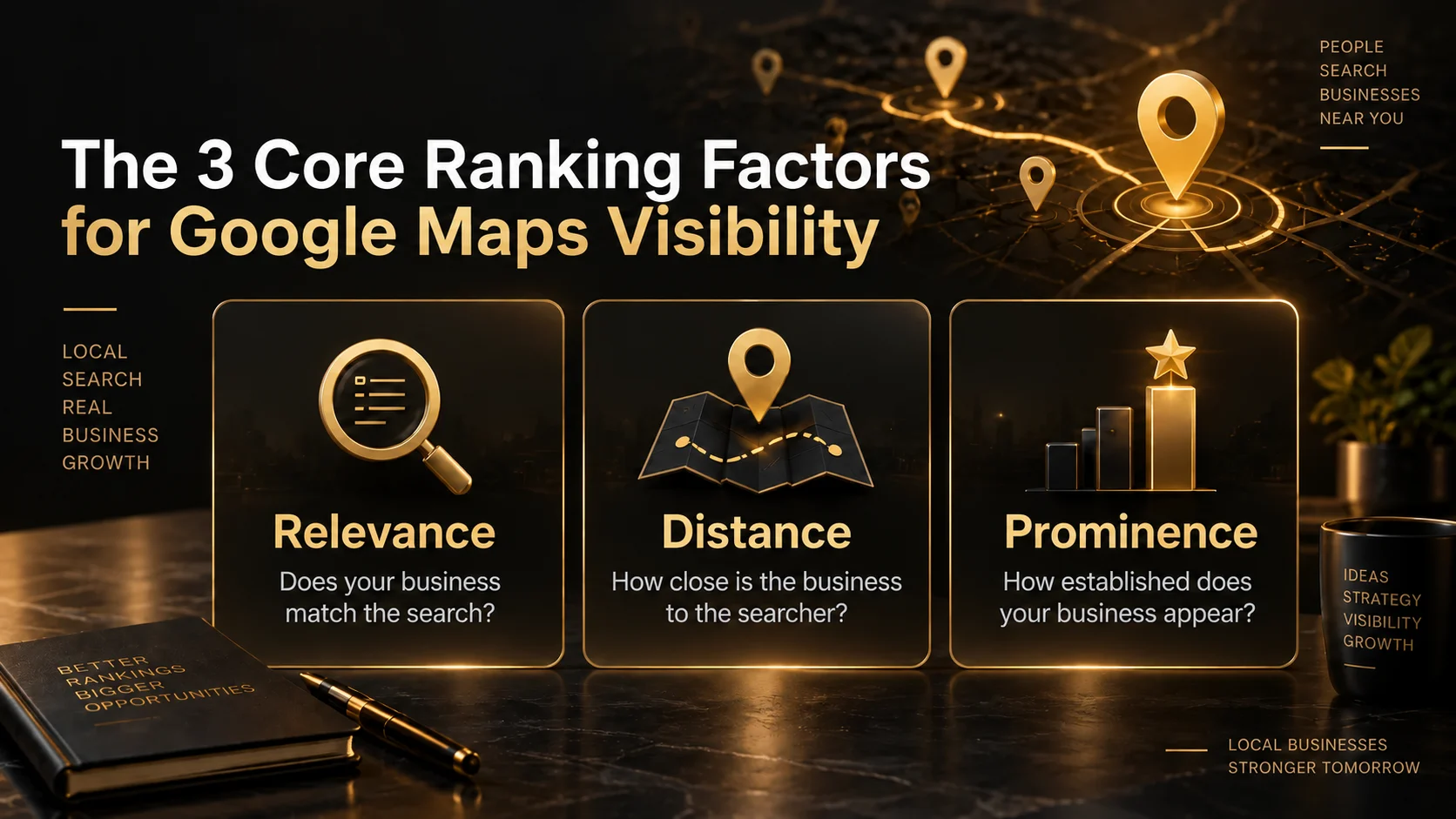
Google says Map Pack rankings mainly depend on relevance, distance, and prominence.
1. Relevance: Does Your Business Match the Search
Relevance measures how well your business matches the search.
If someone searches for an iGaming technology provider in Ontario, Google needs enough information to understand that your company offers that service and serves that market.
Your categories, services, profile details, and website content all help provide that context.
2. Distance: How Close Are You to the Searcher?
Distance measures how close your business is to the searcher or searched location.
This is why Maps results can change depending on where someone searches.
A business located in Toronto may have stronger visibility nearby than for someone searching from another part of Ontario.
Setting a large service area also does not guarantee visibility across the entire province.
3. Prominence: How Established Does the Business Appear?
Prominence reflects how established your business appears online.
Signals can include:
- Customer reviews: Ratings and feedback that build trust. Earned through positive customer experiences and review requests.
- Links from other websites: Other sites linking to yours, signaling relevance and credibility. Earned through quality content, partnerships, PR, and listings.
- Online mentions: References to your business across websites and social platforms. Gained through PR, content, partnerships, and customer discussions.
- Website authority: Your site’s overall credibility and strength in search. Built through quality content, relevant backlinks, and consistent SEO.
- Business reputation: How your business is perceived online. Built through good service, positive reviews, accurate information, and consistent branding.
This is why local visibility usually requires more than simply completing a few profile fields.
How to Increase Visibility on Google Maps?
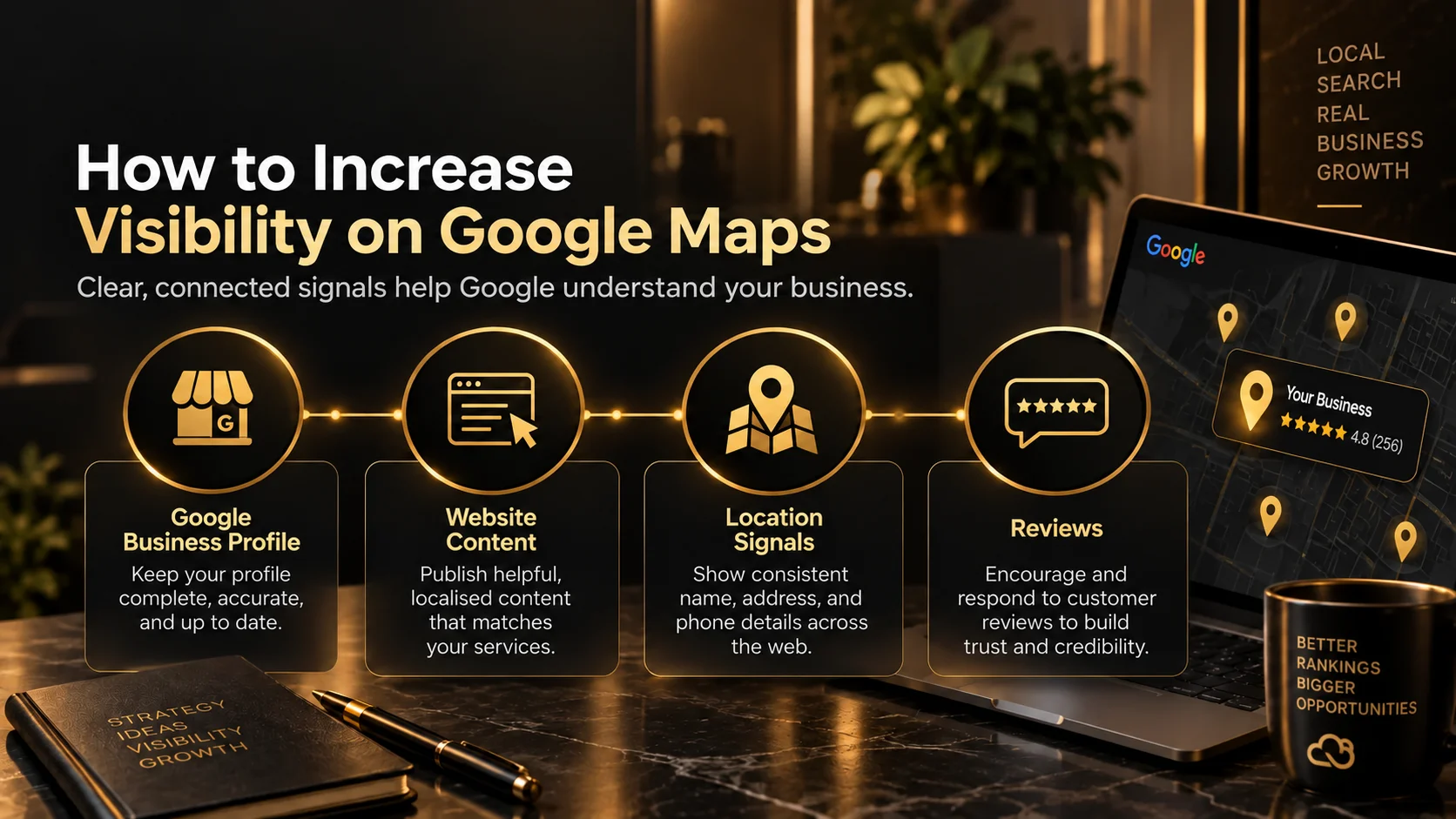
When we work on local visibility, we do not start with a shortcut.
We first ask:
Does Google clearly understand this business?
A strong setup should communicate:
- What the business does
- Which services it provides
- Where it operates
- Which website pages support those services
- Whether customers can trust the information
For example, if an iGaming consulting company wants to reach businesses in Ontario, its profile and website should make that service and location relationship clear.
Simply repeating “Ontario” across a page is not enough.
The content should explain the service, who it is for, and why it is relevant to customers in that market.
The goal is not to manipulate Google Maps. The goal is to make the business easier for Google and potential customers to understand.
Find Your Business on Google AI Overviews and the Map Pack
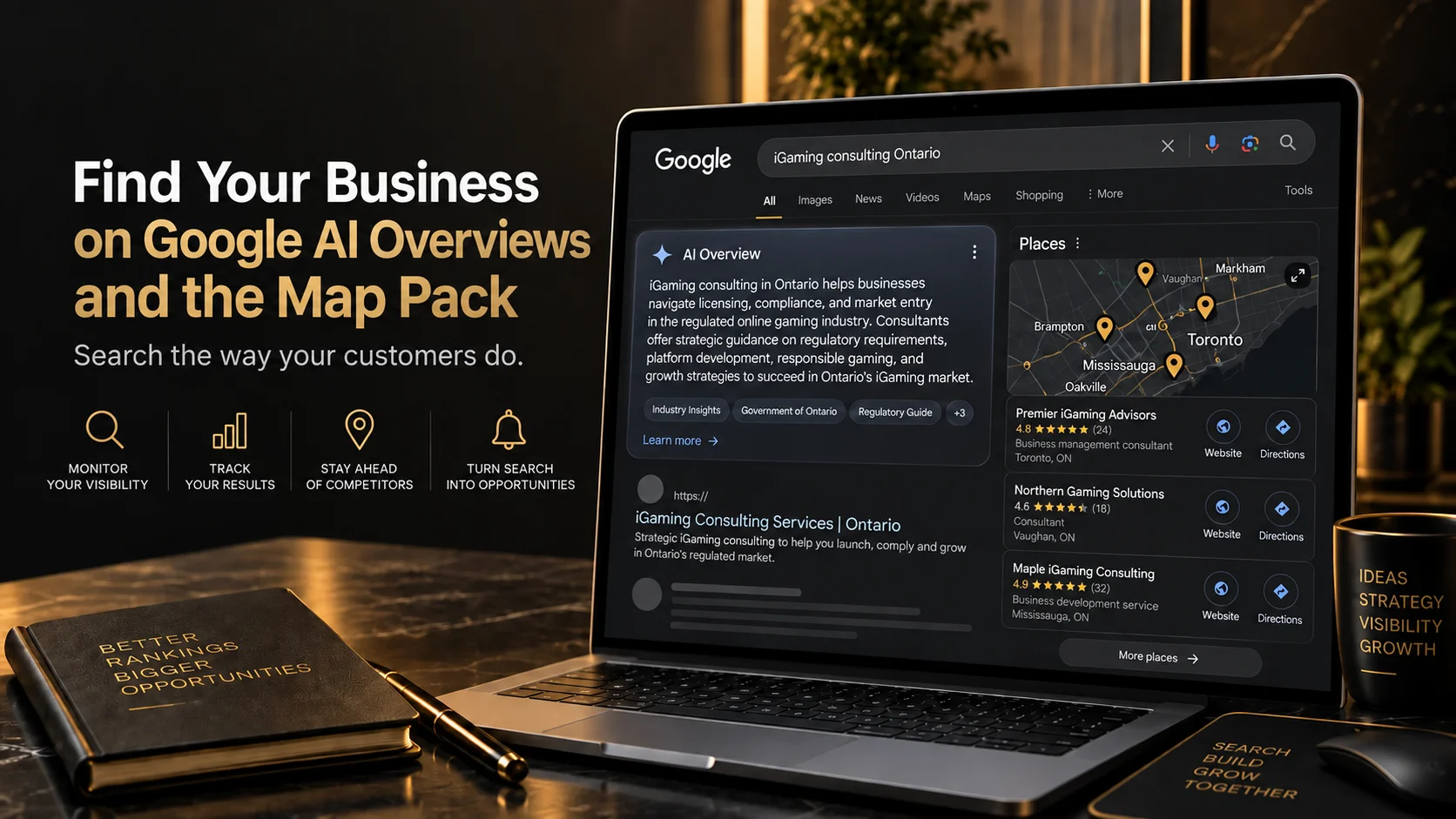
One mistake we often see is measuring visibility only by searching the company name.
That tells you whether Google knows your brand. It does not tell you whether new customers can discover you.
Instead, search the way a potential customer might:
- Service + province
- Service + city
- Service + near me
- Customer problem + location
Example: For an iGaming licensing business, this may include searches around technology, consulting, compliance support, or other relevant services in Ontario or Alberta.
Then review the businesses that appear.
Look at:
- Categories
- Services
- Reviews
- Website pages
- Profile completeness
- Business information
The goal is not to copy competitors. It is to find gaps in your own strategy.
Google search is also becoming more conversational. AI-assisted search and features such as Ask Maps can help users discover businesses based on more detailed needs.
That makes clear business information even more important.
Your website and profile should help Google understand who you are, what you do, and where you operate.
Tips to Help Your Business Show Up on Google
This is the workflow we use to improve local search visibility.
1. Set Up and Optimize Your Google Business Profile
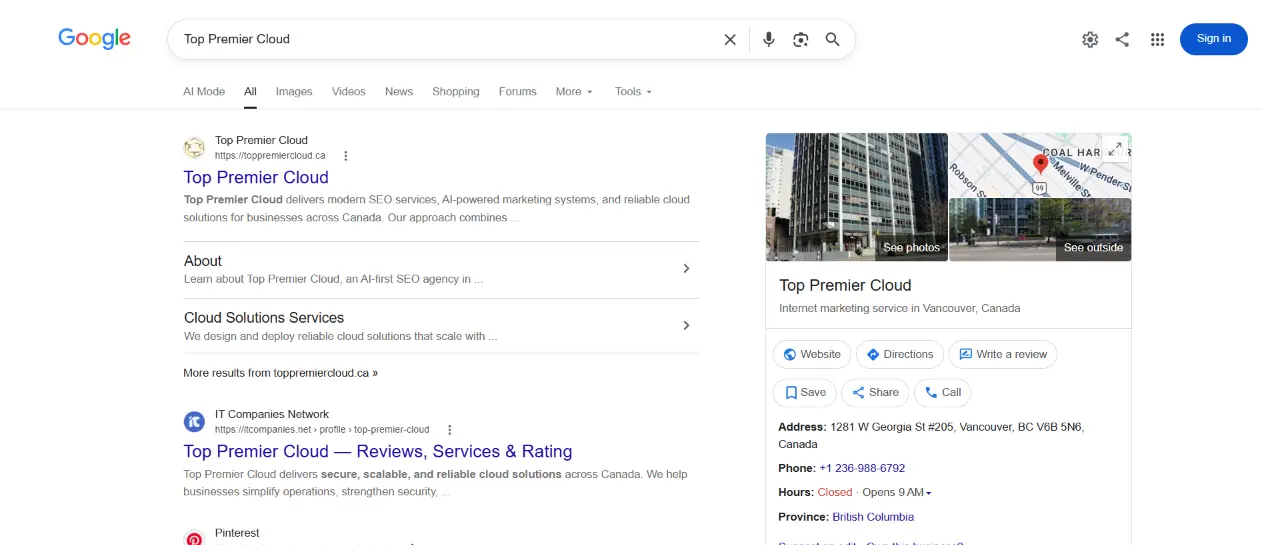
Start with the foundation.
Check:
- Primary category
- Secondary categories
- Services
- Business hours
- Address or service area
- Phone number
- Website
- Business description
- Genuine photos
- Google Business Profile updates
We review this first because inaccurate business information can weaken your local visibility.
2. Research Keywords Based on Service and Location
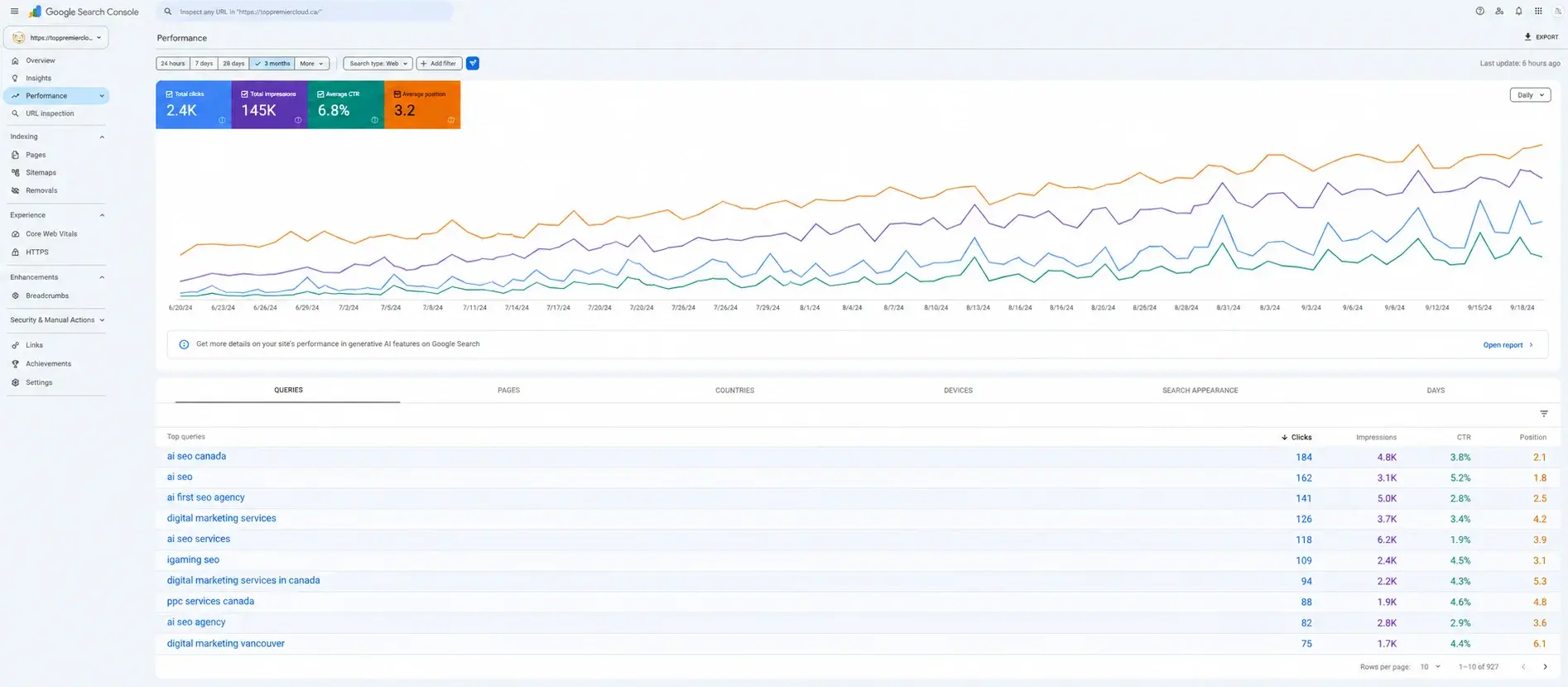
This is an important part of our local SEO process.
We look at how customers search for services in the Canadian market the business wants to reach. This may include terms such as:
- iGaming services Ontario
- gaming technology Ontario
- iGaming consulting Toronto
- iGaming services Alberta
One of the tools we use is Google Search Console. It shows the organic queries already generating visibility for the website, along with clicks, impressions, average CTR, and average position. This data helps us spot keyword opportunities and understand which searches and pages may need more attention.
The right keywords depend on the business, its actual services, and the search intent behind each query.
3. Create Website Content Around Relevant Local Searches
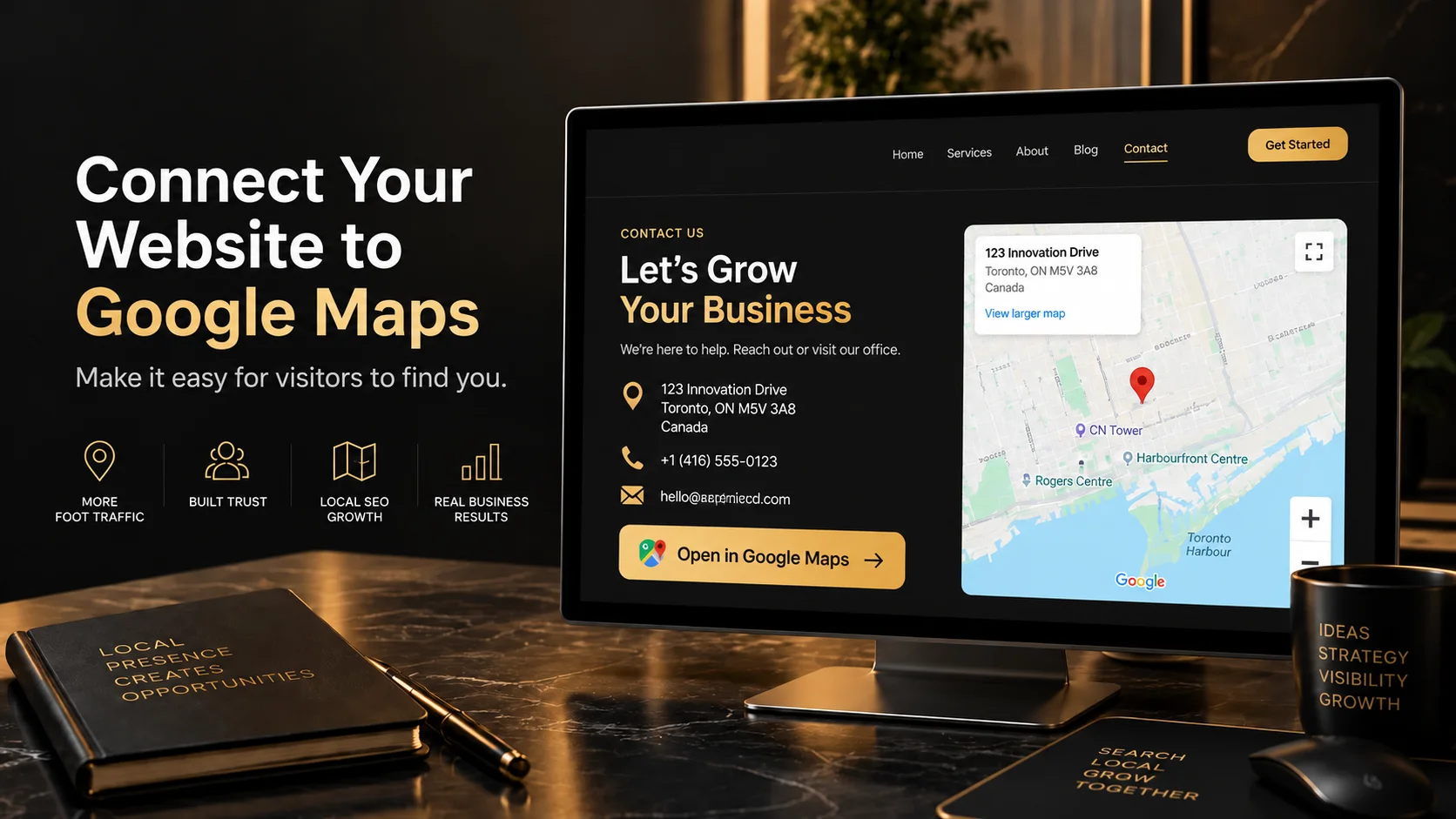
Once we understand the search terms, we review the website.
Does the right page exist? Does it explain the service clearly? Does it actually help the intended audience?
We improve:
- Service pages
- Location page context
- Supporting blog content
- Internal links
- FAQs
- Calls to action
For physical locations, keep your website address consistent with your Google Business Profile and link it to Maps.
Avoid thin pages that simply swap one city or province name for another.
4. Keep Business Information Consistent
Imagine a company changes offices in Ontario but older directories still show the previous address.
That can create confusion.
This is where NAP Consistency matters.
Check that your business name, address, and phone number match across your website, Google profile, relevant directories, and industry listings.
5. Publish Google Business Profile Posts Regularly
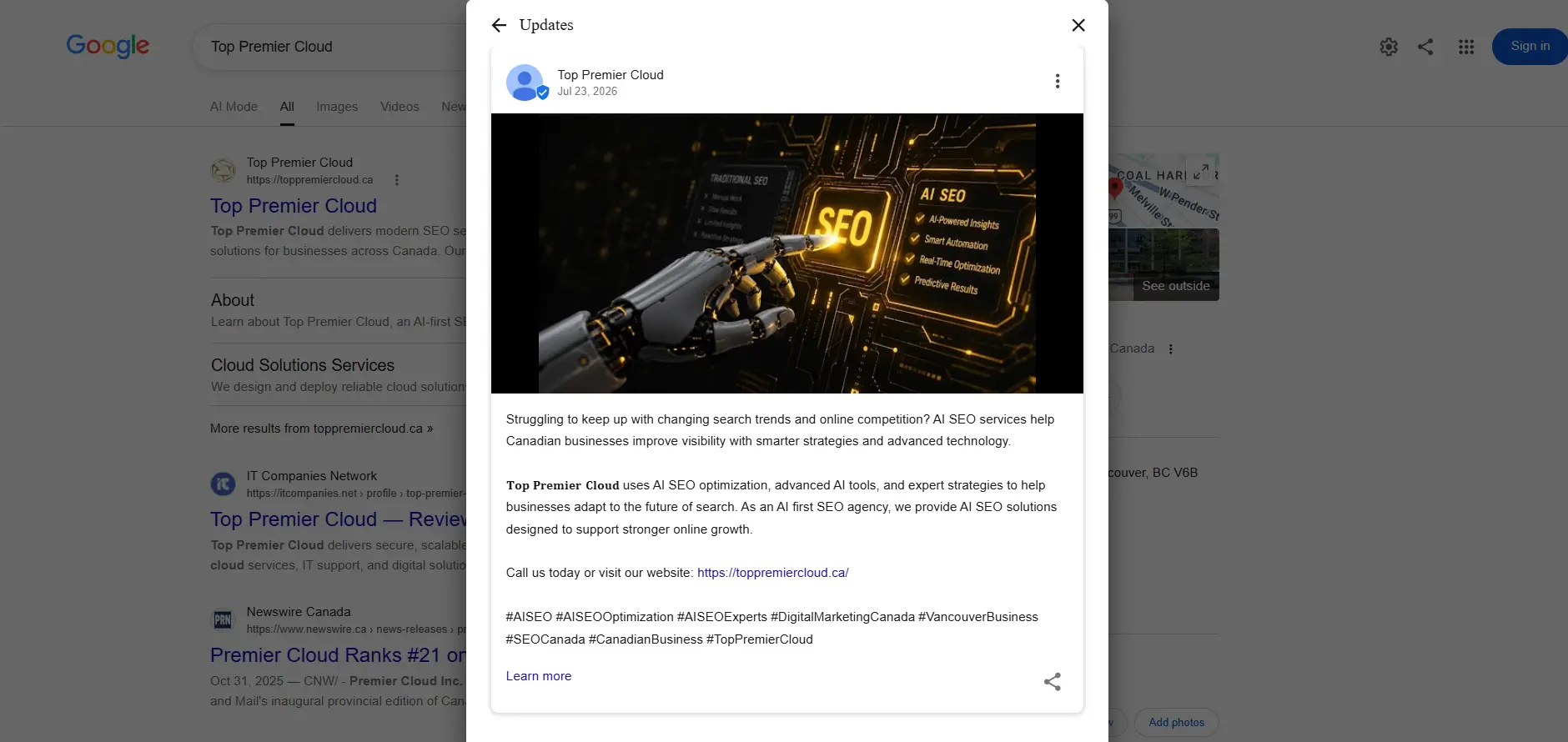
We also keep profiles active with useful updates.
Weekly posts may feature:
- Service updates
- New blog content
- Helpful tips
- Business announcements
- Seasonal information
- Relevant offers
For example, at Top Premier Cloud, we publish Google Business Profile posts that highlight specific services, such as AI SEO, using branded visuals, clear service-focused copy, relevant keywords, and a Learn More link that directs users to the website.
This helps connect the Google Business Profile with the website while giving searchers another way to learn about our services. We regularly create posts around services, blogs, useful tips, and business updates as part of our ongoing GBP management.
We do not treat posting as a guaranteed ranking factor. Instead, it is part of keeping the profile useful, updated, and aligned with our wider SEO content strategy.
6. Keep Photos, Services, and Business Details Current
Regularly review:
- Services
- Business hours
- Website links
- Service areas
- Photos
- Contact details
An outdated profile can create a poor customer experience even if it appears in search.
7. Build and Respond to Genuine Reviews
Encourage real customer feedback and respond professionally.
Reviews can help potential customers understand the business before visiting the website. Thoughtful responses also show that the company takes customer experience seriously.
Avoid fake or manufactured reviews.
8. Monitor the Searches That Actually Matter
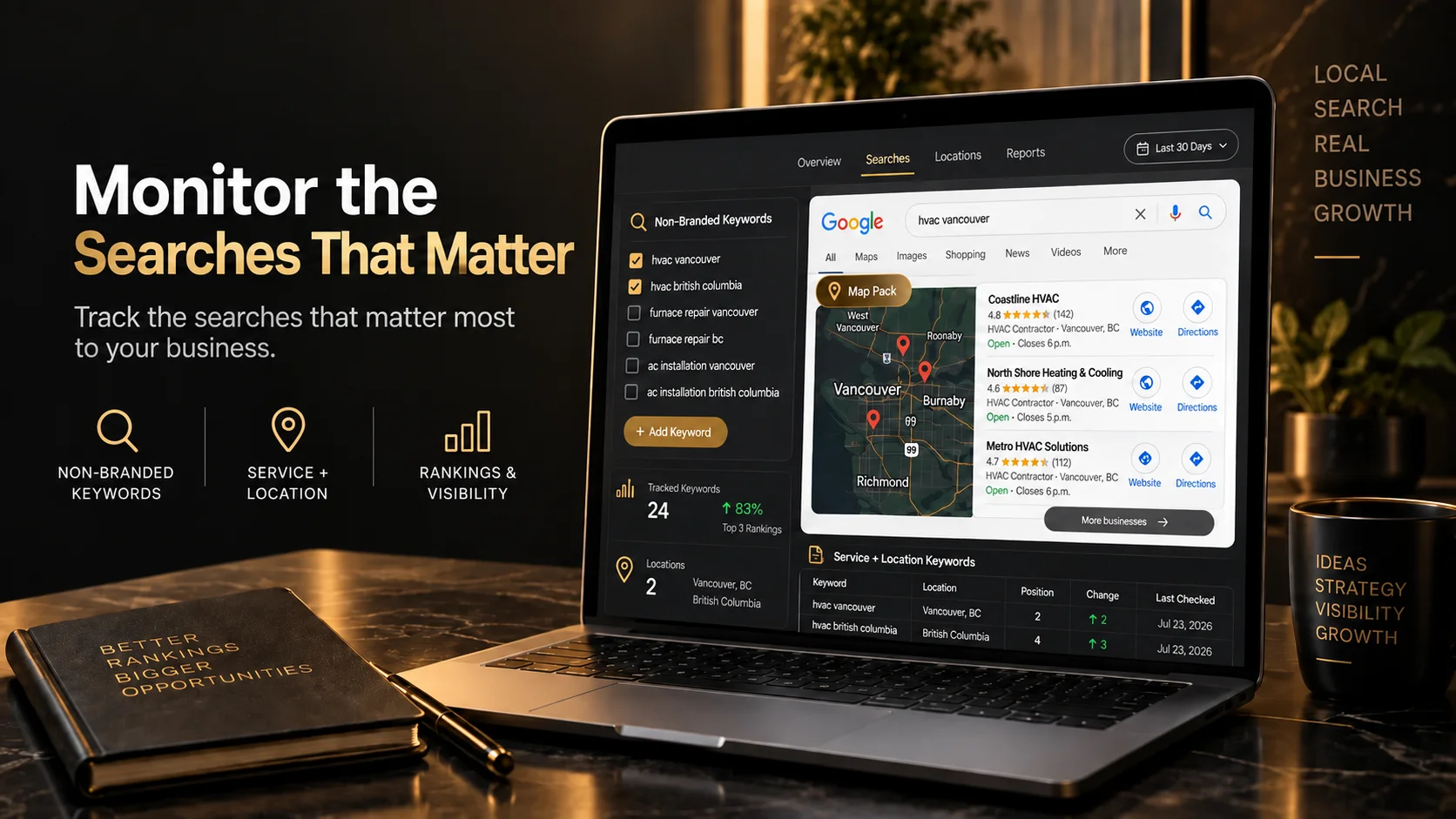
Optimization should continue after changes are published.
We review:
- Service + city searches
- Service + province searches
- Relevant non-branded keywords
- Map Pack competitors
- Website pages appearing for local searches
The key is to keep reviewing what is working, update the profile and website when needed, and monitor the local searches that matter most to the business.
Strengthen Your Canadian Local Search Presence With Top Premier Cloud
If your business already has a Google profile but still struggles to appear for important services and locations, creating another listing is usually not the answer.
At Top Premier Cloud, we help Canadian businesses connect Google Business Profile optimization with location-focused keyword research, relevant website content, and ongoing SEO strategy.
Whether your company serves Ontario, Alberta, or other Canadian markets, we focus on helping Google and potential customers better understand what you offer and where you operate.
If your local visibility is not where you want it to be, Top Premier Cloud can help identify the gaps and build a stronger search presence around the customers you want to reach.