Why Isn’t Your Business Showing Up? Run a Free Local SEO Audit
You have a website. Your business is legitimate. You may even have a Google Business Profile. But when you search for the services you offer, competitors keep appearing while your business is nowhere to be found.
Before spending more on ads or completely changing your website, start with a free local SEO audit.
An audit helps you see what Google and potential customers actually see. It can uncover problems with your website, Google Business Profile, content, technical setup, and Google Maps visibility.
At Top Premier Cloud, we look at an audit as a way to find priorities, not simply problems. You don’t need a huge report filled with warnings. You need to understand what’s limiting your visibility and what deserves attention first.
Start Your Free Local SEO Audit With SERP
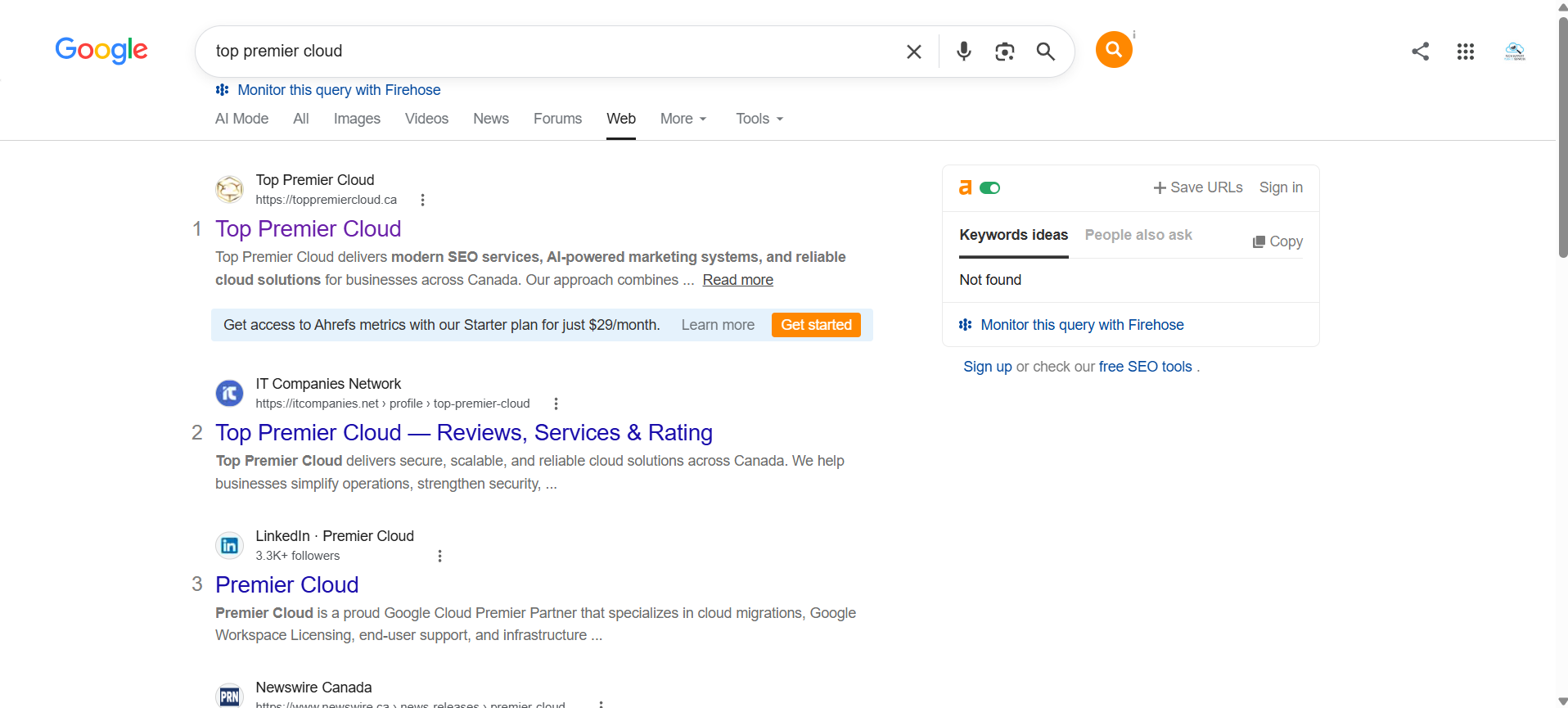
The best FREE SEO tool is the SERP itself.
Seriously, start with Google.
Search the main services your business offers. Add your city or service area where it makes sense. Look at both the Google Maps results and normal organic listings.
Ask a few simple questions:
- Which businesses consistently appear?
- What types of pages are ranking?
- Does your business appear in Maps?
- Does your business appear when you search its exact name?
- Which competitors keep outranking you?
This gives you a useful starting point for your local SEO analysis.
It also reveals your real search competitors. The business you consider your biggest competitor offline isn’t necessarily the website competing with you in Google.
Begin a local SEO audit with the keywords, topics, and search results where a business wants visibility, then evaluating other areas such as the website, Google Business Profile, reviews, citations, and competitors.
Check Your Google Business Profile
Next, look at your Google Business Profile from a customer’s perspective.
Check the important details:
- Business name
- Address
- Phone number
- Working hours
- Website
- Categories
- Services Offer
- Photos
- Reviews
- Maps location
Compare those details with the information on your website.
This matters because your profile is a major part of local SEO for small businesses. An accurate and comprehensive Google Business Profile is an important part of establishing local search visibility.
Don’t just count reviews either. Check whether they’re recent, whether the business responds, and how your review activity compares with competitors.
If you’re thinking, “what if I don’t have access to GMB?” Well, you can still perform a useful public audit.
Search for the business on Google and inspect the profile like a customer would. You can review visible categories, contact information, reviews, photos, hours, website links, and Maps presence.
For client work, simply note what you couldn’t verify without account access. Don’t guess.
Use a Free Local SEO Audit to Check the Website
Now move from Google Maps to the website.
If you have Google Search Console access, check what searches are generating impressions and clicks. Look at which pages Google is showing and whether important service or location pages receive visibility.
Then inspect the website manually.
Can visitors quickly understand what the business offers and where it operates? Are important services easy to find? Do service and location pages provide useful information?
This is where SEO services, along with web design & development, connect with local visibility. Ranking is only part of the job. Once someone reaches the website, the experience still needs to make sense.
Also check indexing, mobile usability, page performance, internal links, titles, headings, and structured data.
Use These FREE Local SEO Tools
Before paying for SEO software, remember the first tool you should use is SERP.
Google’s search results are free and show what’s actually ranking right now. They reveal your search competitors, the types of pages Google prefers, your Maps presence, and where your visibility starts falling behind.
For a basic audit, that’s incredibly useful information for zero cost.
After checking the SERP, use these free tools to investigate further:
- Google Business Profile: Review how the business appears in Search and Maps
- Google Search Console: Check queries, clicks, impressions, indexing, and page visibility.
- PageSpeed Insights: Identify performance and Core Web Vitals issues.
- Rich Results Test: Check whether Google detects supported structured data.
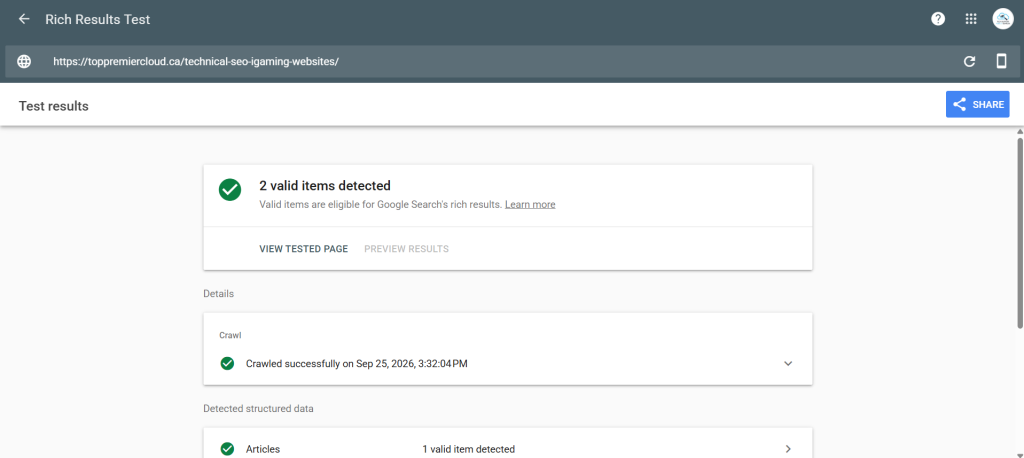
- Schema.org Validator: Find errors and warnings in schema markup.
- localseoaudittool.com: Use this FREE local SEO audit tool for additional local checks.
Note these useful findings, especially for client reports. But don’t simply collect findings and scores. Explain what each result means and whether it actually needs attention.
How to Do Local SEO Audits for Clients?
Keep client audits simple and repeatable.
Start with the SERP and Google Maps. Then inspect the Google Business Profile and website. Finally, use Search Console and the free tools above to investigate technical or visibility problems.
Your core local SEO audit checklist can focus on four areas:
- Search and Google Maps visibility
- Google Business Profile and business information
- Website, service, and location pages
- Technical SEO and search performance
Then, prioritize your findings.
A major service page that isn’t indexed deserves more attention than a minor technical warning with little impact. Incorrect business information may also deserve attention before smaller website improvements.
That’s how Top Premier Cloud does its approach with AI Local SEO Services. The goal isn’t to impress a client with the longest checklist. It’s to show what may be limiting visibility and what should be addressed first.
Business Owners: Can I Do a Free Local SEO Audit Myself?
Yes. You can handle much of the initial investigation yourself.
- Search your services on Google.
- Check where you appear.
- Review your Google Business Profile.
- Compare your pages with businesses already ranking locally.
- Then run important pages through the free tools above.
The harder part comes after the audit.
You might uncover 15 issues, but that doesn’t mean all 15 deserve immediate attention. The real challenge is determining which problems are affecting visibility and which improvements can wait.
A free local SEO audit gives you evidence instead of guesses. From there, you can improve your profile, website, content, and Google Maps visibility based on what you actually find.
If your audit starts getting more technical than expected, contact Top Premier Cloud to help with digital marketing services, local SEO, and website improvements based on the issues affecting your business.
The goal isn’t just to check boxes. It’s to understand why your business isn’t showing up and start fixing the things that matter.