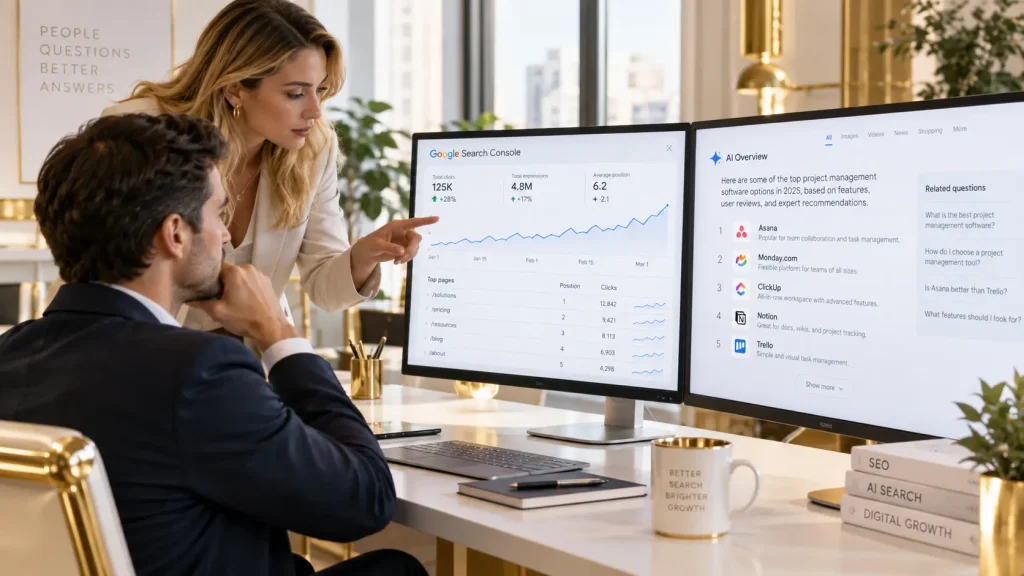

You spend time creating product photos, service graphics, infographics, and blog images, but they still seem invisible in search. Your pages may be indexed, your content may be optimized, and yet your visuals rarely appear when people search for something relevant to your business.
That matters more now because AI image search is changing how people discover information visually. Instead of relying only on typed keywords, users can upload an image, take a photo, or use visual search tools to find similar products, places, objects, and information.
For growing businesses, this creates another opportunity to be discovered. But simply uploading attractive images isn’t enough. Search engines and AI systems still need enough context to understand what those images represent.
How Does AI Understand an Image?
Modern search systems don’t look at an image the same way a person does. They can analyze visual features while also using information surrounding the image to better understand its meaning.
Think about a business uploading a photo named IMG_4928.jpg.
A person may immediately recognize that the photo shows a cloud infrastructure team working inside a data center. A search system has to determine that from several signals.
Useful context can come from the filename, alt text, page content, captions, structured data, and the overall topic of the website.
This is where SEO for images becomes useful. You’re not simply describing a picture. You’re helping search systems connect that visual with the topic, business, product, or service it represents.
AI Image Search Starts With Clear Context
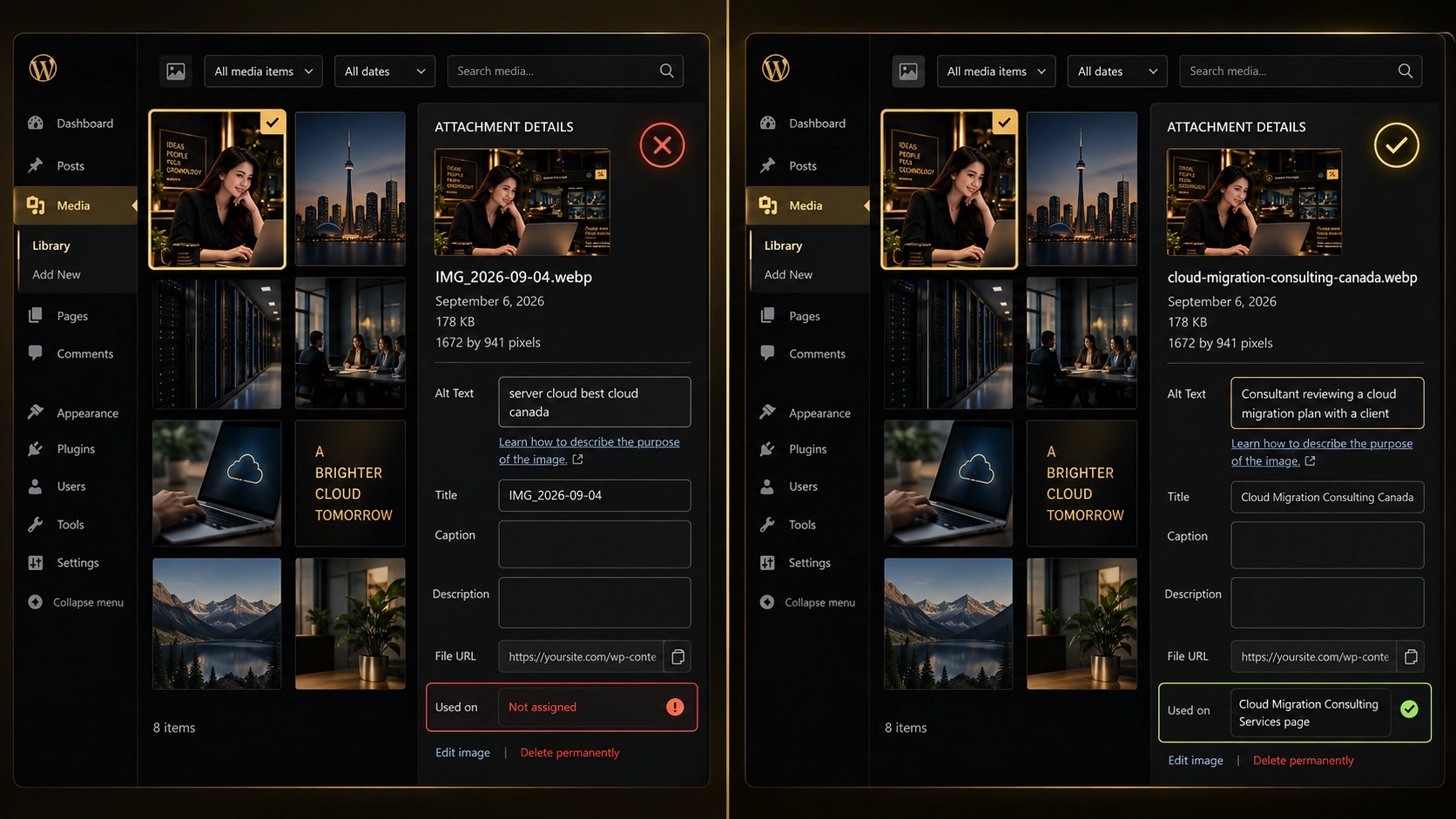
One of the simplest improvements is also one of the most overlooked: give every important image a clear purpose.
Instead of uploading “IMG_2026-09-04.jpg”
Use something descriptive, such as “cloud-migration-consulting-canada.jpg”
The same principle applies to alt text. Describe what the image actually shows instead of forcing keywords into every description.
The page surrounding the image matters too. A photo of a server rack on a page discussing cloud migration provides much stronger context than the same photo placed on an unrelated page.
At Top Premier Cloud, we look at images as part of the page’s overall search strategy rather than treating them as decoration added after the content is finished.
Can AI Recognize Your Business From Your Images?
Potentially, but recognition shouldn’t be assumed.
AI systems can identify many objects, visual patterns, landmarks, products, logos, and other features. Connecting an image specifically to your business, however, depends on the information available to the system.
To make it easier for AI systems to connect your images with your business, focus on these key practices:
- Use original and relevant images
- Place the images on relevant parts of pages
- Use clear and accurate image filenames
- Add descriptive alt text
- Keep your business information consistent across your sites and profiles
- Use structured data to provide more context about your business
The goal isn’t to trick AI into recognizing your brand. It’s to remove ambiguity.
Are Reverse Image Searches Safe?
A reverse image search lets someone upload or submit an image to find visually similar images or related information online.
The technology itself has legitimate uses, such as finding an image’s source, identifying products, checking where a photo appears online, or discovering visually similar content.
Privacy still deserves attention.
When using any visual search service, businesses should consider what they’re uploading and review the platform’s privacy policies. Avoid submitting confidential documents, private customer information, internal screenshots, identification documents, or other sensitive material unless you understand how that service handles uploaded data.
The same caution applies when employees use visual search tools for work.
How to Get Your Growing Business Found by AI Search

Getting discovered through AI search by image isn’t about finding one special optimization trick. It comes from making your website and visual content easier to interpret.
Start with the basics:
- Use useful, original images that genuinely support the page.
- Give image files descriptive names.
- Write accurate and concise alt text.
- Place images beside relevant written content.
- Use appropriate structured data where applicable.
- Make sure important image pages can be crawled and indexed.
- Optimize image size without destroying visual quality.
- Keep business and brand information consistent online.
You should also think about search intent.
If you’re a local service company, show your actual services, projects, team, location, or process when appropriate. If you’re selling products, provide clear product photography from useful angles instead of relying entirely on generic stock images.
These visuals give search systems more meaningful information to work with while also helping potential customers understand the business.
Don’t Optimize Images Separately From Your Website

Image optimization works best when it supports a strong page.
An excellent photo won’t compensate for thin content, confusing site structure, slow performance, or a page that doesn’t clearly explain what the business offers.
That’s why Top Premier Cloud approaches visual optimization as part of a broader search strategy. Images, written content, technical SEO, structured information, website performance, and user experience should reinforce each other.
As AI-powered discovery grows, businesses have more places where customers may encounter their content. Preparing images now can help create stronger signals for both traditional and AI-driven search experiences.
If your business has valuable visual content that isn’t getting discovered, Top Premier Cloud can help review your website, image optimization, technical SEO, and overall search visibility. Contact us now to build a search strategy that helps both people and AI systems better understand what your business has to offer.