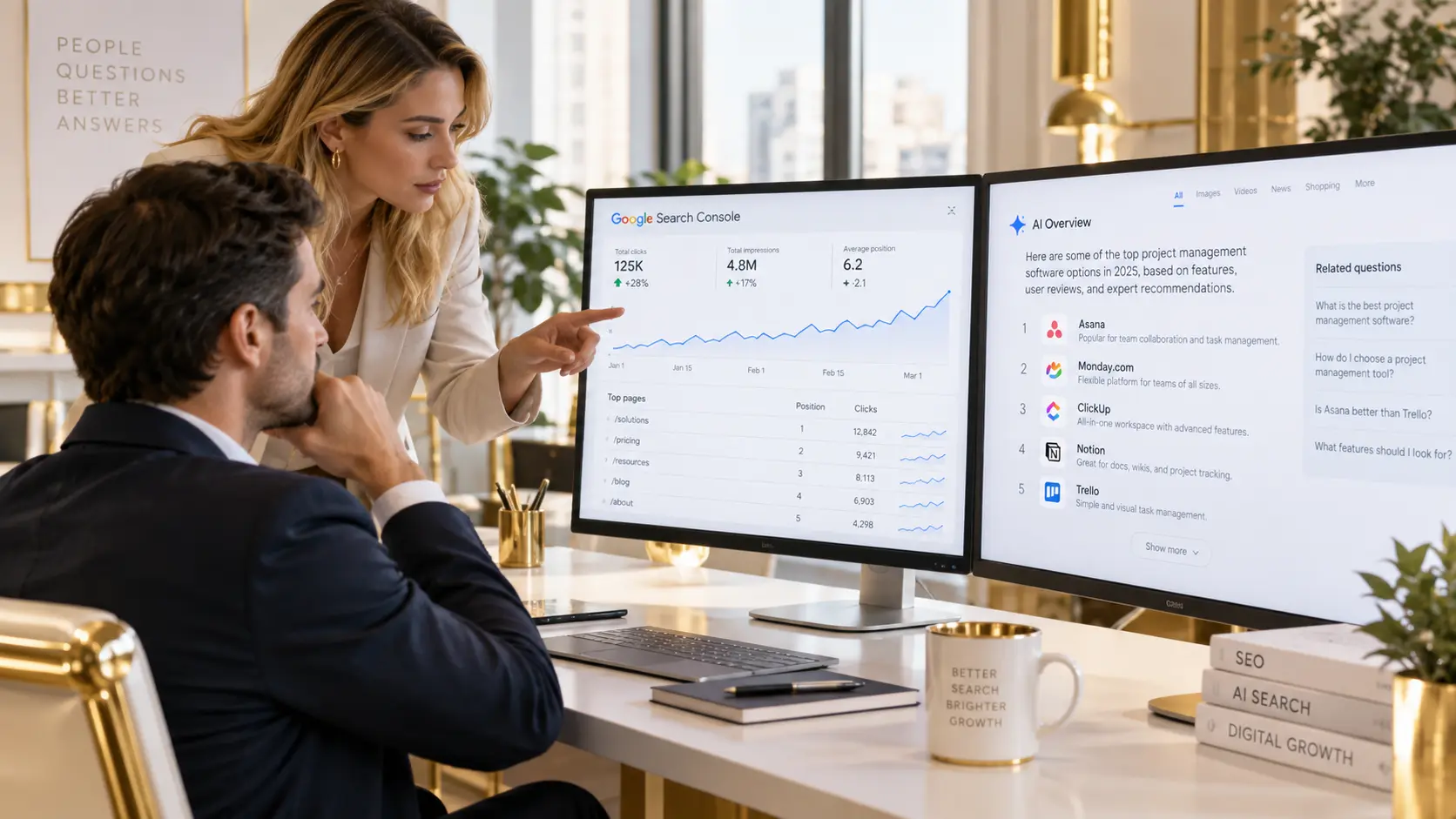
Your page is sitting on page one. The rankings look healthy. Search Console shows impressions. Then you ask Google an AI-powered question related to your service, and your business is nowhere in the answer.
That’s becoming a frustrating situation for a lot of brands.
SEO for AI doesn’t mean traditional rankings suddenly stopped mattering. The problem is that ranking and being selected as a source for an AI-generated answer are related, but they aren’t the same thing.
At Top Premier Cloud, we’ve learned to look beyond position numbers. A page may rank because Google considers it relevant to a keyword, while an AI system may prefer other sources because they provide clearer answers, stronger context, better supporting information, or more recognizable authority.
So if you already rank, what’s missing?
Why SEO for AI Goes Beyond Your Google Position
Traditional organic visibility still gives you an advantage. We found that pages ranking higher organically tend to have a better chance of appearing in AI Overviews. But a number-one ranking doesn’t guarantee a citation.
That distinction matters.
AI-generated results can pull information from several sources, combine related topics, and use specific passages rather than simply choosing the Top 3 ranking in the SERP. Google may look at the main query, related questions, entities, supporting concepts, and other context before producing an answer.
This means a page optimized around one keyword can still be too narrow.
Instead of asking only, “Does this page rank?” ask:
- Does it answer the main question clearly?
- Does it cover the questions that naturally come next?
- Can Google crawl and understand it easily?
- Does the information show experience or expertise?
- Is the brand supported by trustworthy signals elsewhere?
That’s a much more useful starting point for AI SEO.
How to Be Visible in AI Search?

Start with the basics before chasing special tactics.
Your important pages should be crawlable, indexed, technically healthy, and easy to navigate.The Google’s recommendations for AI-generated search still begin with normal SEO requirements, helpful content, and strong E-E-A-T signals.
Then make the content easier to extract and understand.
At Top Premier Cloud, we prefer pages that answer a question early instead of making readers dig through several paragraphs. Use clear headings, short explanations, examples, supporting evidence, and logical internal links.
Our broader AI SEO framework also recommends starting from real customer questions and building connected topic clusters rather than publishing unrelated articles just to increase content volume.
That gives search systems more context about what your business actually knows.
Your Content May Be Too Similar to Everyone Else’s
Here’s another problem we see often.
Search the topic and open five competing articles. Sometimes they all say almost exactly the same thing.
If your page simply rewrites information that already exists everywhere, why should an AI system choose your version?
You must identify the competitive differentiation as one factor in improving visibility in AI-driven results.
- Original data
- Firsthand observations
- Useful examples
- Expert commentary perspectives
- Topic or questions that your competitors haven’t covered can make content more distinctive.
You don’t need groundbreaking research in every article.
Even practical experience helps.
Explain what businesses commonly misunderstand. Show what you’ve seen go wrong. Give a realistic example. Clarify where a popular recommendation doesn’t work.
That kind of detail gives the content something to contribute.
How to Boost Your AI Search Visibility
- A useful approach to AI overviews optimization is to think beyond one page.
Strengthen the whole topic around it.
If your main article explains AI SEO, supporting content might cover technical crawlability, entity signals, structured data, content gaps, brand authority, local search, reporting, and AI citations. Internal links then connect those pages naturally.
- Your brand also needs signals beyond its own website.
Relevant backlinks, industry mentions, reviews, partnerships, local citations, and expert contributions can all provide additional context about who you are and what topics you’re associated with. These guide recommends as outside references as part of building trust, not as a shortcut for manufactured link building.
Google and AI, highlights brand authority and mentions across reputable sources as factors associated with visibility in AI-generated results.
What Are the Top 5 Free SEO Tools?
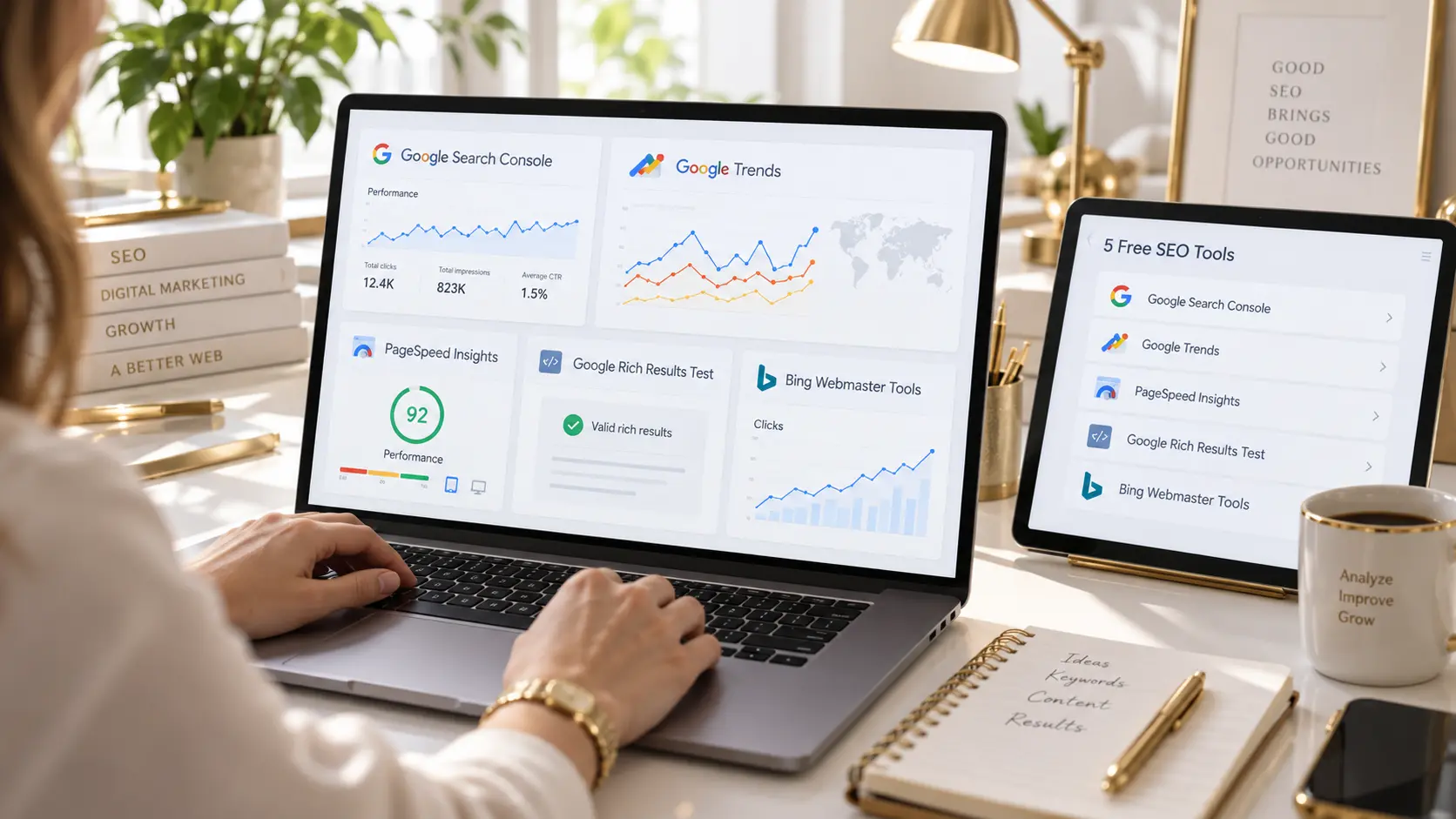
You don’t need an expensive software stack to start checking the basics.
Five useful free tools are:
- Google Search Console for indexing, search queries, clicks, and page performance.
- Google Analytics 4 for analyzing the data received from your website.
- Google Trends for comparing topics and changes in search interest.
- PageSpeed Insights for performance and Core Web Vitals.
- Google Rich Results Test for checking supported structured data.
- Bing Webmaster Tools for additional crawl, indexing, and search data.
If you’re searching for a Free AI SEO tool that can solve everything automatically, be careful. No single tool can tell you exactly why one source gets cited and another doesn’t.
Use tools to identify problems. Human judgment still matters when deciding whether the content is actually useful, original, and trustworthy.
Stop Measuring Only Rankings
Ranking reports still have value, but they no longer tell the entire story.
Track whether important pages are indexed, which queries attract qualified visitors, whether branded searches are increasing, which pages generate leads, and where your company is being mentioned or cited.
Top Premier Cloud approaches AI SEO this way because visibility is becoming broader than one results page.
A business can rank well and still have weak content depth, unclear expertise, poor technical signals, or little authority outside its own website.
The goal isn’t to abandon Google rankings. It’s to build on them.
You may already be ranking in search—but if AI-generated answers keep overlooking your brand, there’s likely a visibility gap. Top Premier Cloud can help uncover what’s holding you back by reviewing your content, technical SEO, topic coverage, and authority signals—then identifying what needs to improve for stronger AI search visibility.